Close the validation-to-reality gap in safety-critical AI.
Systematically.

Your model passed validation. Then a set-aside dataset broke it. Then a hospital pilot failed. Then a reviewer asked a question your evaluations had no answer for.

You find out months too late via a deficiency letter, a governance review, or a stalled deal. By then, you’ve already built in the wrong direction or shipped a model with flaws still buried inside it. The distance between what your model proves and what it does in the world keeps widening, faster than you can close it.

Tessel closes that gap as fast as it opens.

Pre-Sub (AUC)
94.2%
Hospital (AUC)
75.1%

Validation is a snapshot. Reality isn't.


Building software was never perfect, but it was legible. The spec said what correct meant, your tests checked it, and when an edge case slipped through, one more test closed the gap. The procedure stood in for the outcome.

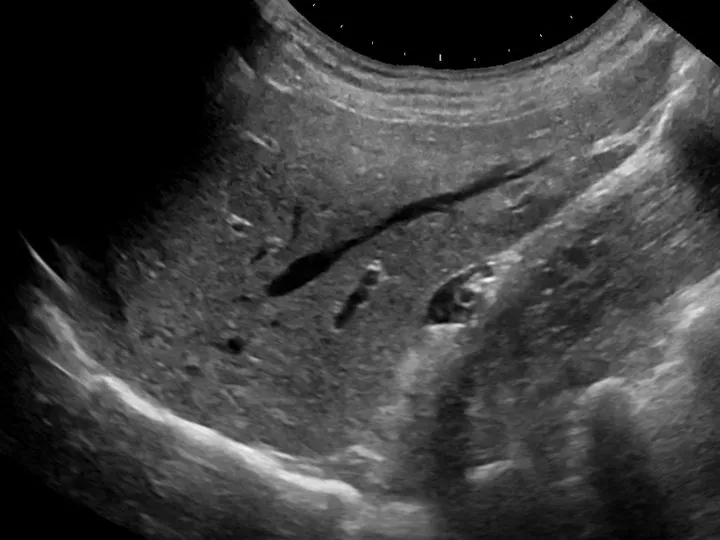
AI has no answer key. It's pointed at the hardest problems, the ones without settled answers: two experts read the same scan and disagree, and the right call depends on the patient in front of you. You can pass every validation and still get it wrong, because each test is a snapshot, and no snapshot captures a world this complex.

The answer isn't more snapshots. It's the argument behind them: which pieces matter, how they fit, and which real-world outcomes they add up to. In AI, validation will always drift from outcomes. You need a system that closes the gap as fast as it opens.

Validation Never Matches Deployment

No test set captures the combinations of sites, scanners, protocols, and demographics your model will face.

Failure Is Opaque

You see the score drop. You don't see which assumption broke. The next model misses it again.

Ground Truth Is Delayed

Biopsies and outcomes take months. A model can make wrong calls for a quarter before anyone notices.

You Can't Iterate Your Way Out

Updating a cleared model means a new filing. Years pass while the world keeps moving.

How Tessel closes the gap


Today, evaluation captures snapshots, not why they stand in for real-world outcomes. That reasoning stays in your team's heads, so when a model breaks, all you see is the score that dropped, not the process failure that caused it. Tessel structures that reasoning as living safety cases: evidence-backed arguments about how your AI will behave across the scenarios that matter most to the stakeholders who develop, approve, govern, or use it.

To build them, Tessel drives deep investigations into model behavior across the entire product lifecycle, constantly proving where your AI model works for stakeholders, and flagging critical evidence gaps where it doesn't. Your method of proof sharpens as you learn more about their priorities and as new outcome data arrives, from the payoff on early development bets to feedback in the market. Tracking whether your safety case predicted the outcome reveals the exact procedural failure and directly hardens your operational gates.

Generalization

Prove the model generalizes across sites, demographic cohorts, scanners, and protocols. Automatically catch drops from site-specific bias, new geographies, or unseen protocols.

Data Quality

Prove the foundation under your model is sound. Automatically catch imaging artifacts, label inconsistencies, and missing metadata before they corrupt model behavior.

Continuous Monitoring

Prove the model holds up against reality. Track live outcomes against the claims in your safety case, and flag any claim weakening in real time.

FDA-ready. Hospital-ready. EU-ready.


Stakeholders have varying standards for what constitutes adequate evidence, and these standards are constantly evolving. Tessel organizes this evidence into a unified structure that serves as a robust foundation for all stakeholders, ensuring your proof remains valid even as regulations change.

"The model is safe for Deployment"

FDA

Subgroup analysis across the 12 demographics in the IFU, no disparate performance. Bias metrics documented and exportable for 510(k) or De Novo. FDA-ready.

Hospital A

256 cases on Hospital A's patient mix pass; one known failure mode identified. Hypertension comorbidity drives false positives, flagged for clinician review. Hospital-ready, with one mitigated boundary.

EU AI Act

Continuous drift detection on deployed cases, documented remediation protocol in place. EU-ready.

Built for the highest stakes in medicine.


Diagnostic AI Vendors going through 510(k) and De Novo submissions, and Academic Medical Centers running LDT validations, use Tessel's evidence infrastructure to inform critical development decisions, surface where models break, and build safety cases that hold up against real-world outcomes. Across the AI lifecycle, every decision rests on evidence, and every failure traces back to the procedure that produced it.

1

Development

Base every major development decision on evidence. When a development bet doesn't pay off, trace it back to the assumption that informed it, and the safeguard that should have caught the gap.

2

Regulatory

Map your evidence to the reviewer's standard before you submit. When a deficiency lands, the gap points straight to the development procedure that should have produced the proof.

3

Hospital Procurement

Back your claims with evidence on data like the buyer's. When local validation finds a gap on their population, the broken assumption traces back to the development procedure that should have tested it.

4

Post-Market Monitoring

The safety case updates continuously with evidence from deployment. When a failure mode emerges, the development decision that missed it is named, and so is the procedure that should have caught it.

Turn every AI failure into better procedures that lead to better outcomes.

Start with a focused investigation. Surface the failure modes, evidence gaps, and unanswered questions that matter most before your next submission, deployment, or procurement decision.

Have questions?
Contact us.